Virtual Branch - the UX-driven video banking platform
Website
Contact to orderType
FinTech, Banking
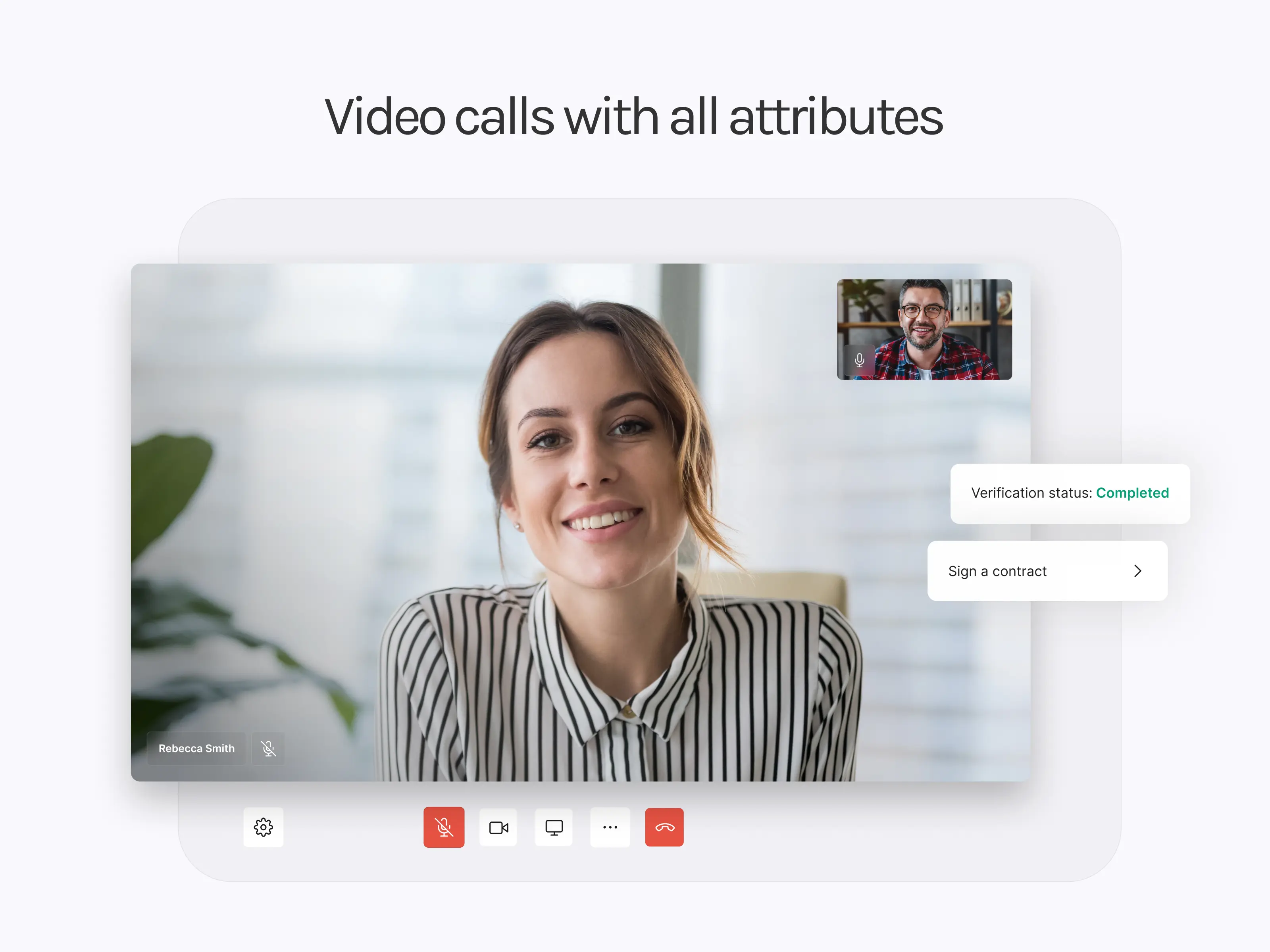
Virtual Branch is an online video extension platform dedicated to banks and insurance companies. The product was discovered by 10Clouds in cooperation with Mastercard, Pexip, and top financial industry representatives, their clients, employees, and advisers.
Together, we discovered the product through extensive market research and workshops with the end users.
Services
Our challenge
The lack of availability of remote banking services has a strong impact on client experience. **Poor accessibility, little time flexibility, location restrictions or extreme situations such as account suspension while abroad**, have come into the spotlight.
Observing the problems of limited access to remote banking services, 10Clouds in cooperation with Mastercard decided together to discover and validate a solution that would **enable customers and employees a new quality of service**.
Discovery Process
The entire Product Discovery process was divided into three main phases. Our activities adopted a top-down approach, namely defining the basic framework of the product, which had become more detailed with each subsequent action taken. This approach made it possible to start development work very quickly (instead of waiting for the completion of the research phase), thus significantly accelerating the preparation of the MVP version of the solution.
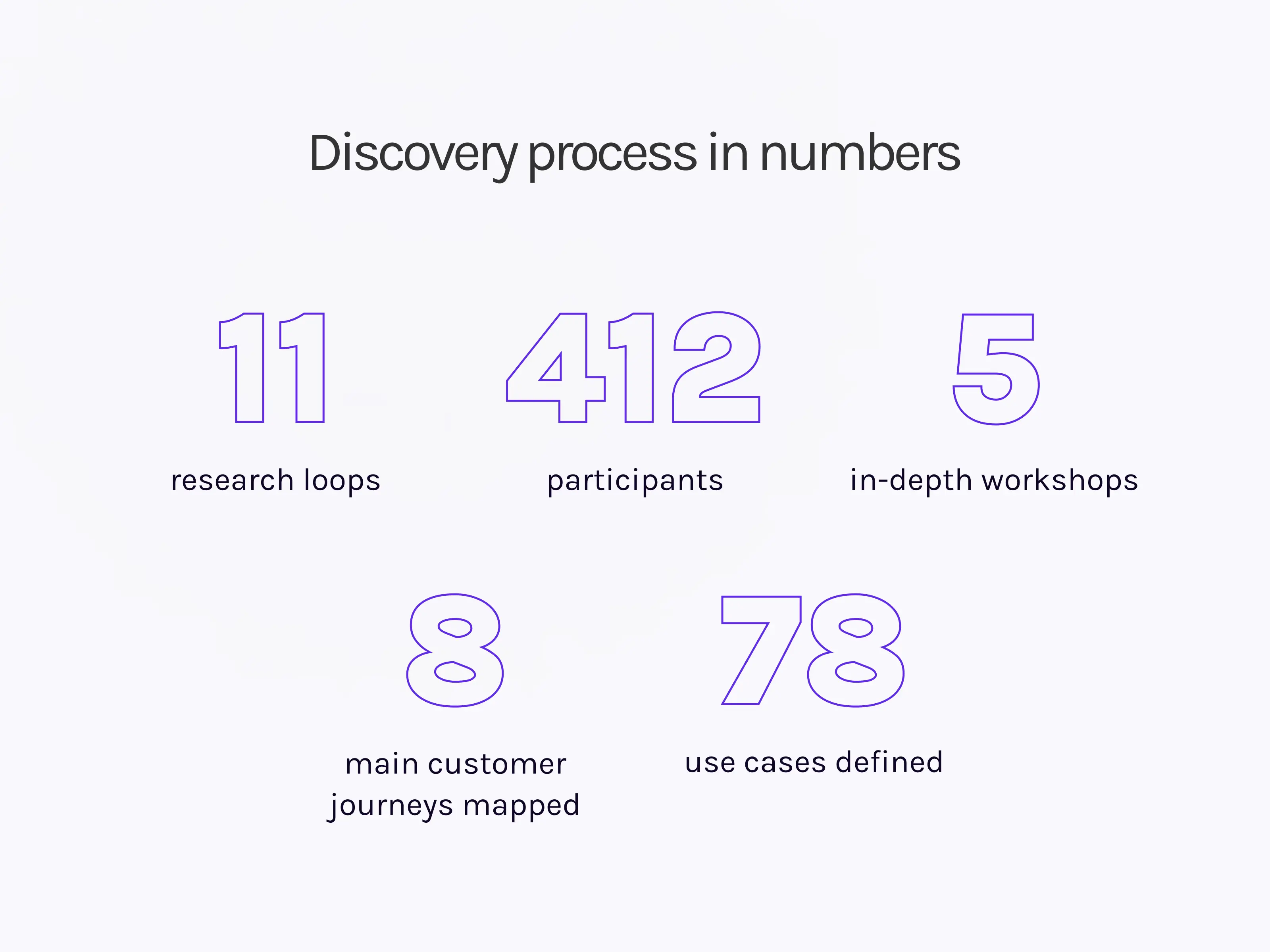
Phase 1: Exploration
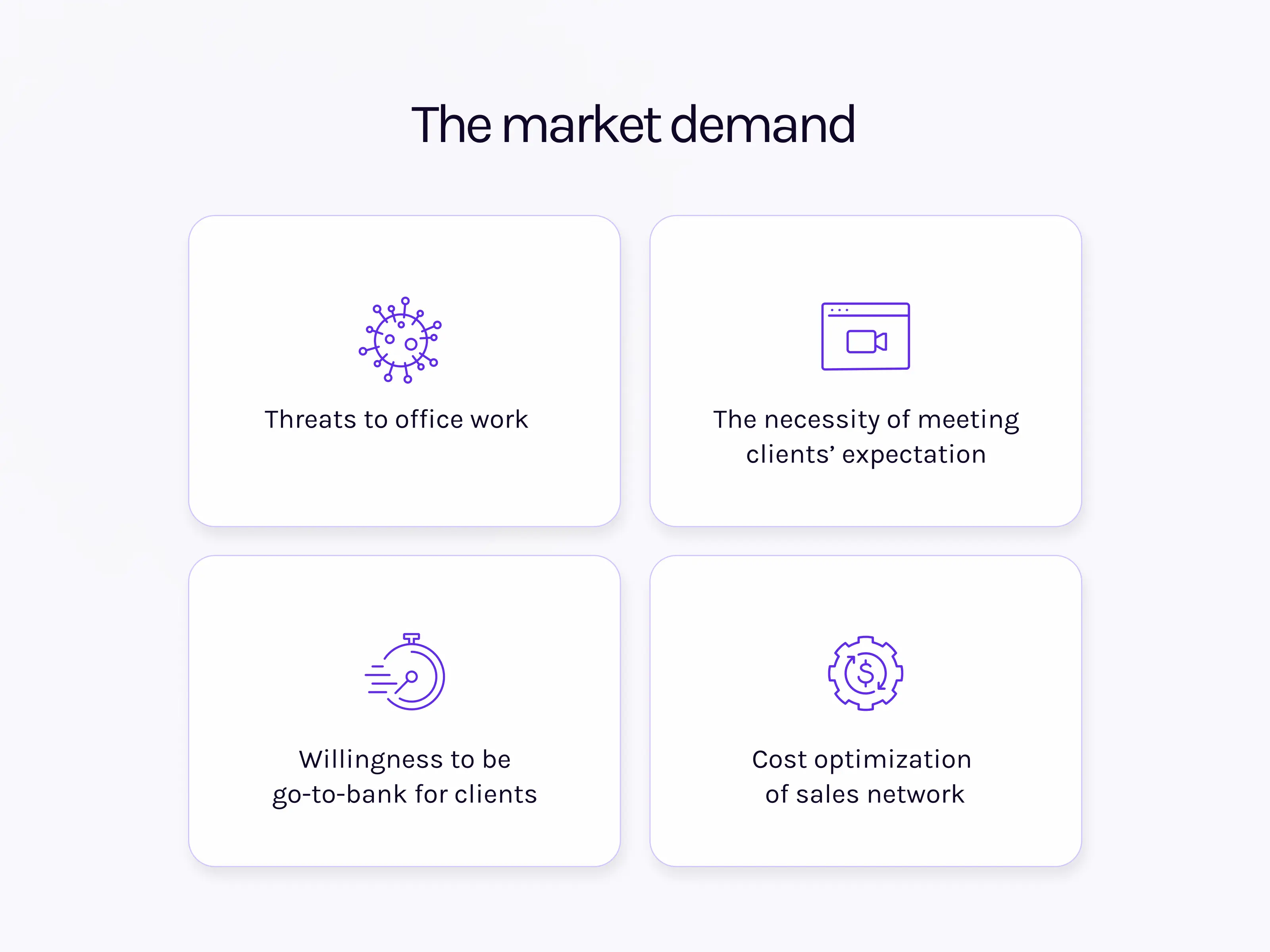
We started our exploration activities with market research. This allowed us to assess market demand, quickly verify the main assumptions, develop a concept base and identify opportunities and threats. When analyzing reports and trends, we focused on a broader perspective that went beyond the banking industry.
Service Safari
The analysis was then supplemented with observations and actions netnography in order to quickly compare our research with the behaviors of real recipients.
Having scoped the initial area of the service under investigation, we embarked on a Service Safari. We recreated customer journeys to see the way the existing banks’ virtual services were used. This helped us learn first-hand opinions about the processes, and identify problems recipients of those services had encountered.
Phase 2: Workshops
Equipped with the research from the Exploration phase, we began to refine it with our own recipients. We organized online and face-to-face meetings to dive deep into the user story. We were aware from the beginning that we will deal with a wide range of users - both those who would use the solution on a daily basis and those deciding about its implementation. Virtual Branch is an extensive solution. We had to structure our workshops accordingly.
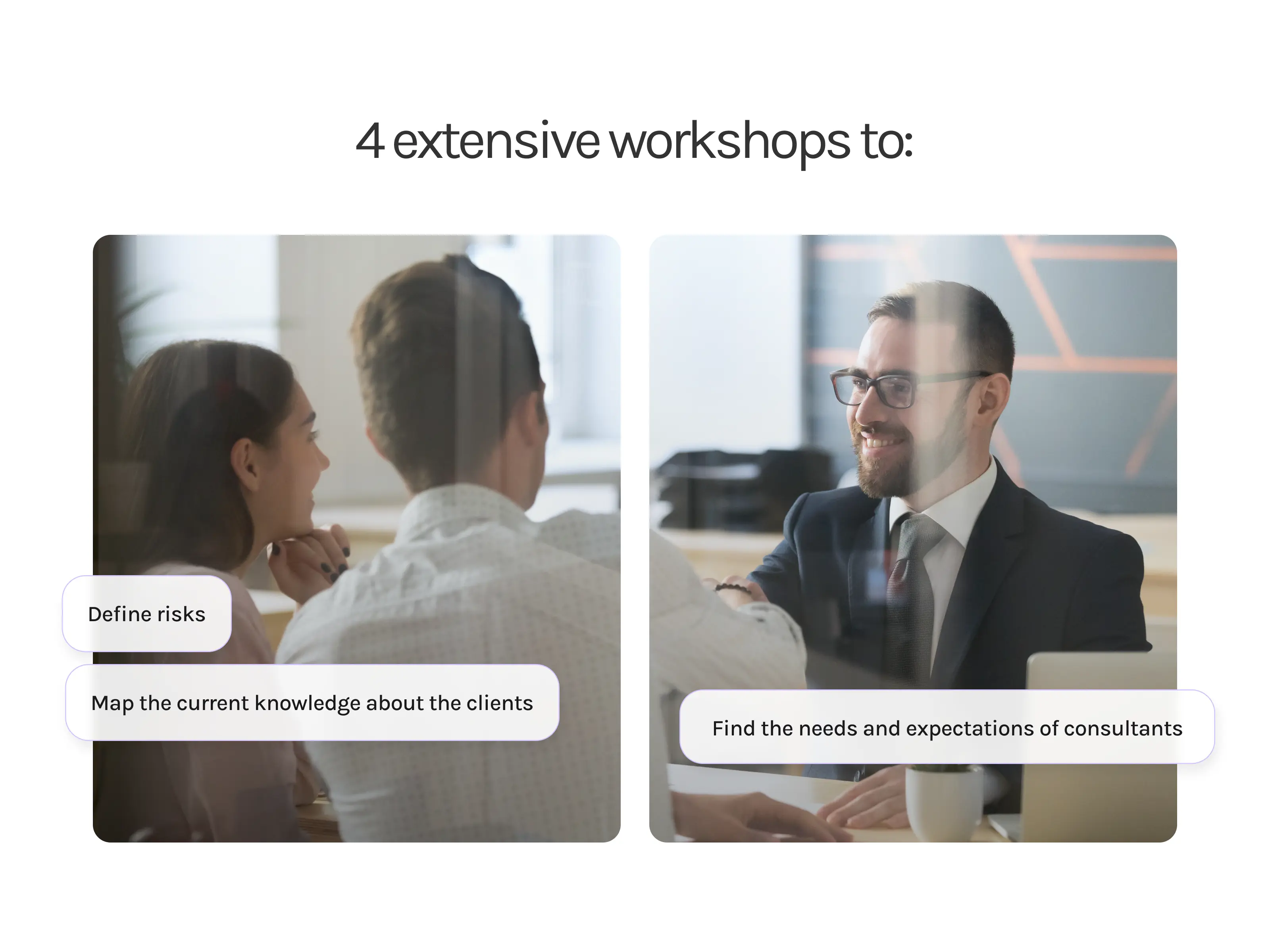
Workshops: Bank stakeholders
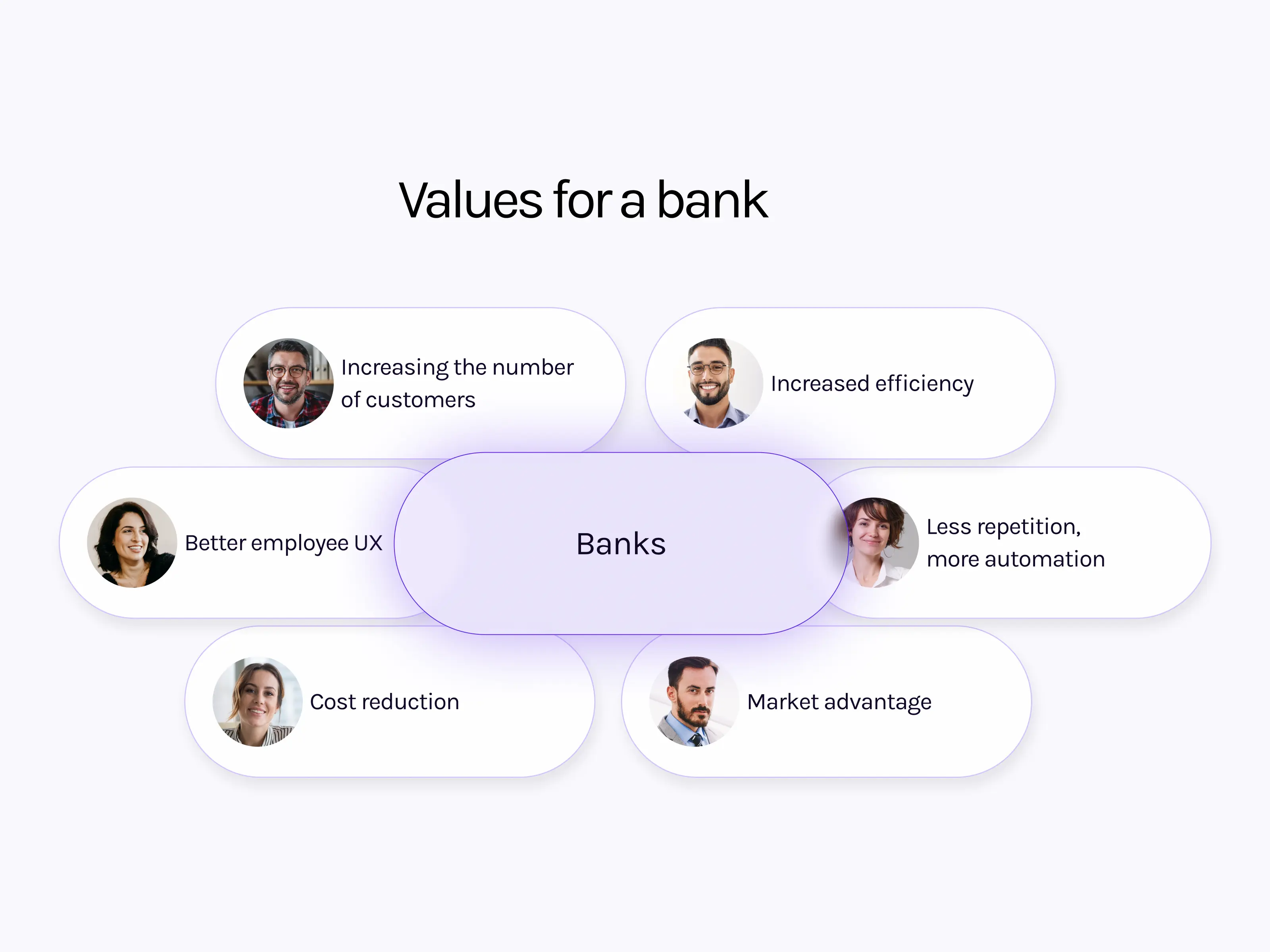
To meet the expectations of financial insitutions themselves, we organized a comprehensive workshop with banking entities (Mastercard, BNP Paribas, mBank, Raiffeisen and others), in which we jointly defined their goals, expectations, the scope of the service, problems that might affect its correct implementation, as well as values that Virtual Branch would bring them.
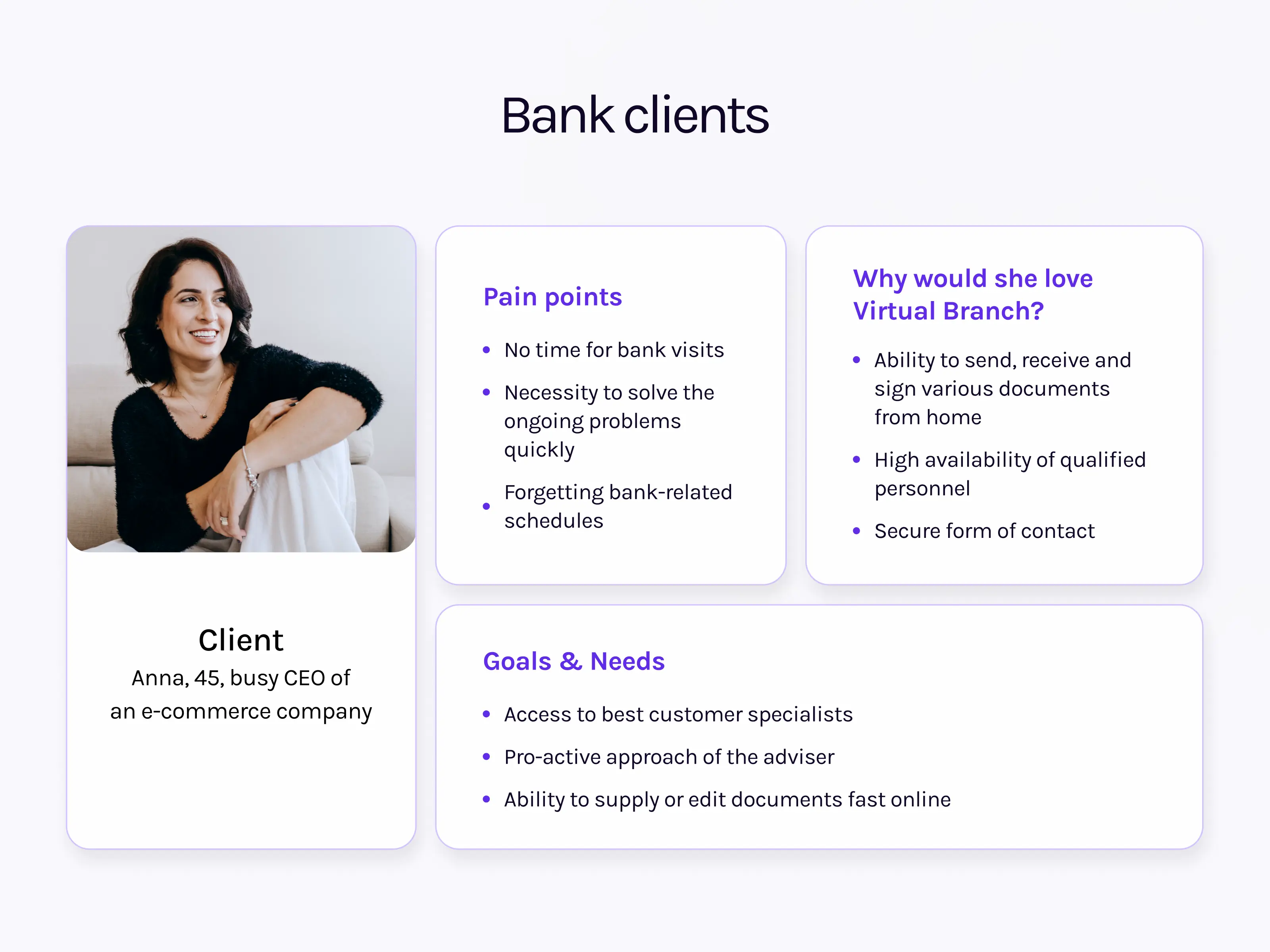
Workshops: Bank clients
We decided to use two different methods in research with the end users: surveys and in-depth individual interviews. After scenarios and surveys had been developed, they were made available to selected target groups with the help of cooperating banks. You can read more about the surveys in a separate article.
Next, in-depth interviews were developed and conducted, including the recruitment of a wide range of groups. This activity allowed us to obtain missing information related to decision-making paths, deepen the threads regarding the perception of the relationship with the bank and consultant, and finally - talk about both opportunities and threats from the perspective of a bank client.
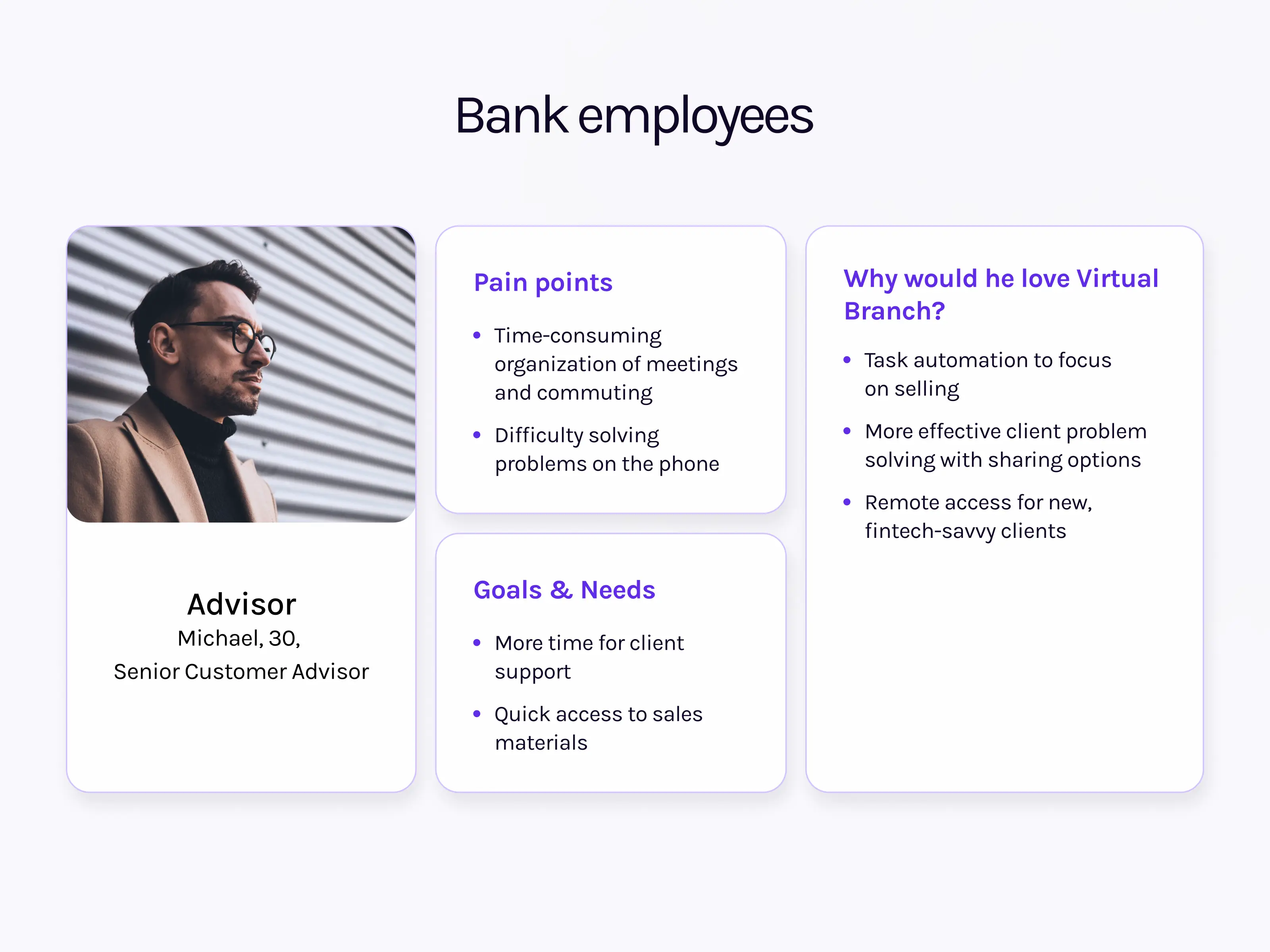
Workshops: Bank employees
When we first think about the service, we think about the bank's customers as end users. However, a very important recipient category are the bank employees themselves, who will not only use the solution every day, but will also initially be the first point of contact with the recipients. Feedback we collected during the workshops was crucial for our solution to really answer the needs of banks and their client's advisors.
Phase 3: Research summary & UX strategy
Researching and collecting all the information while creating a product concept is only half the job. The most important activity is its proper mapping and development of specific materials and design assumptions.
We divided the collected information into two sets of messages:
- Materials supporting design and development
- Materials supporting strategic assumptions, with appropriate mapping of communication and value information
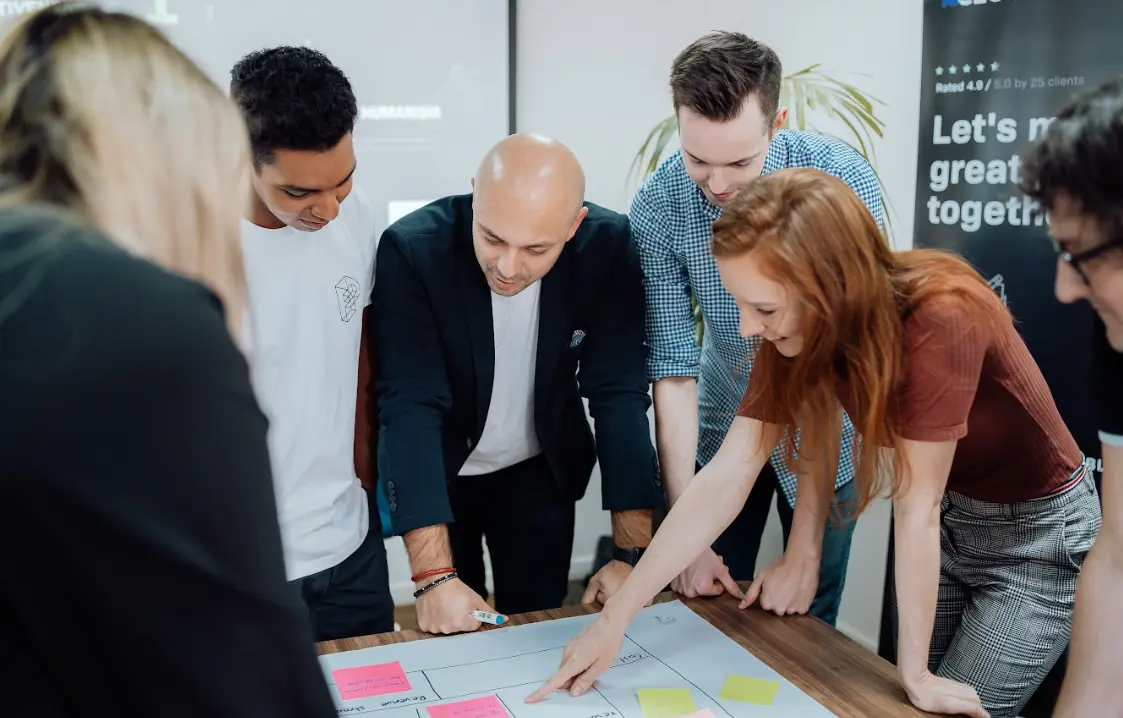
Expert-assisted knowledge structuring
The developed range of now applicable knowledge was prioritized so that we could determine the scope of the MVP's work and plan the full version of the solution.
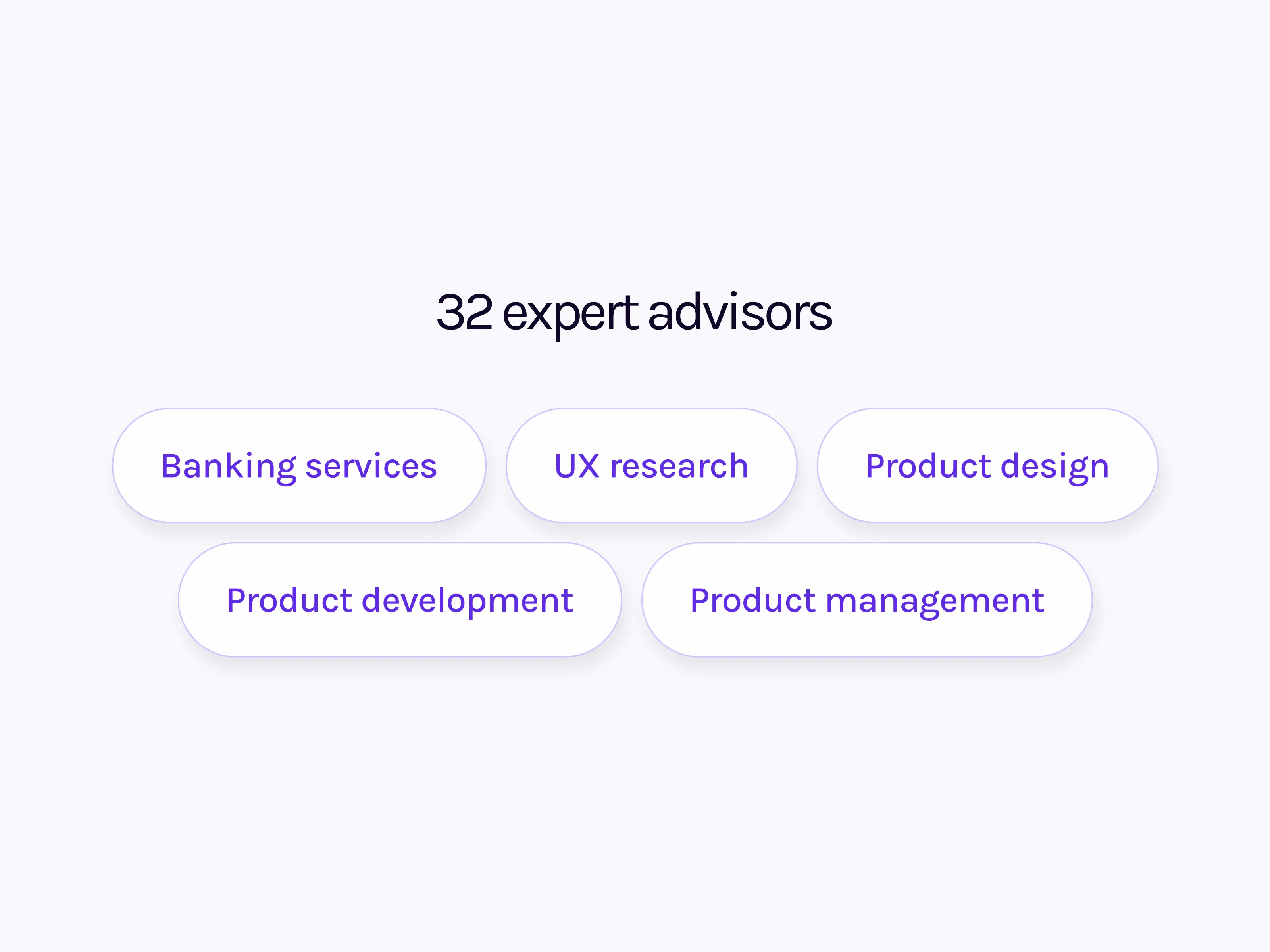
In the case of the UX strategy, we focused on both framework materials (such as vision, mission, business model, target groups, personas, KPIs) and communication with all recipients (promises, values, tone of voice). As many as 32 experts in different areas were involved.
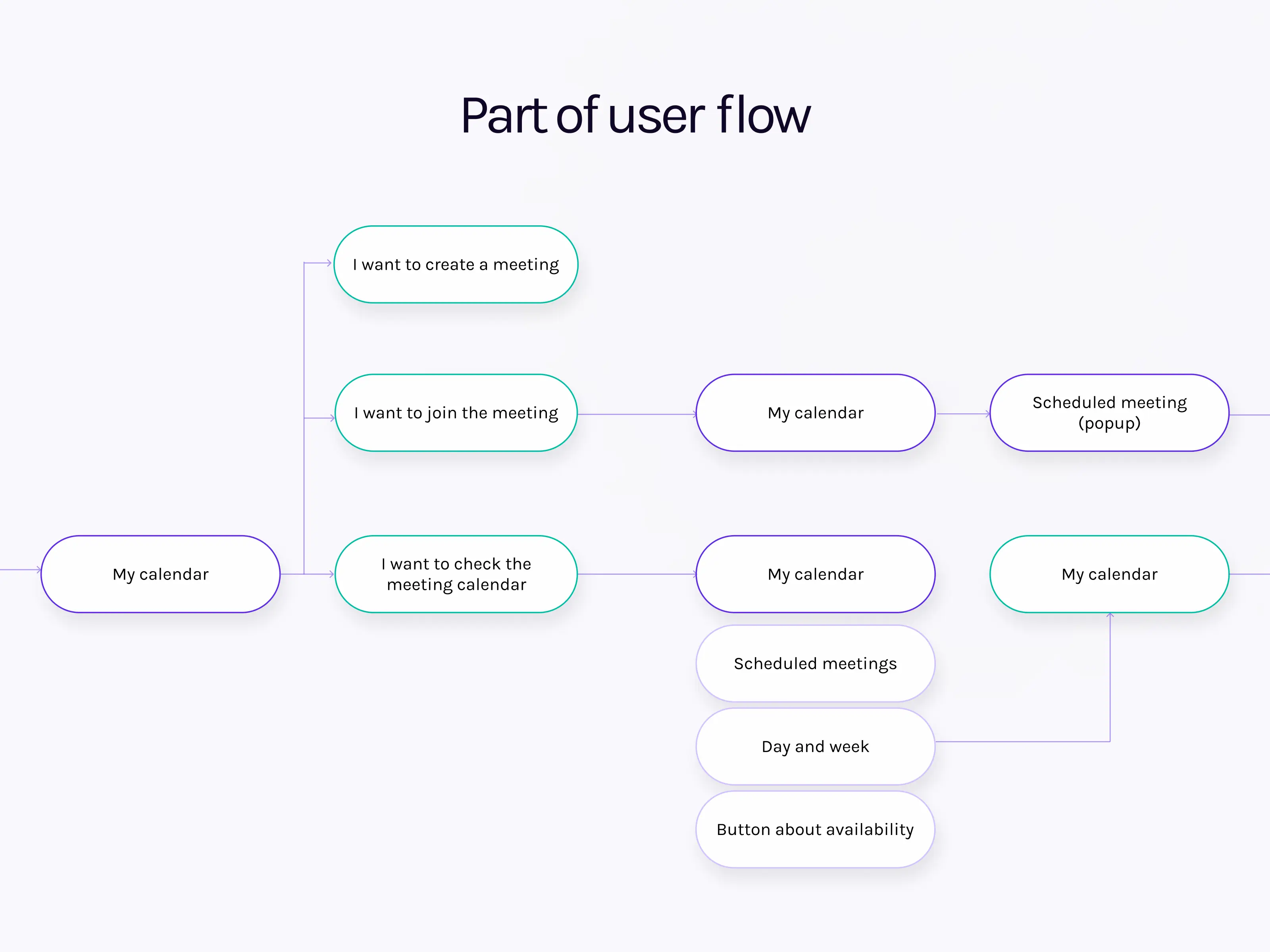
Service mapping
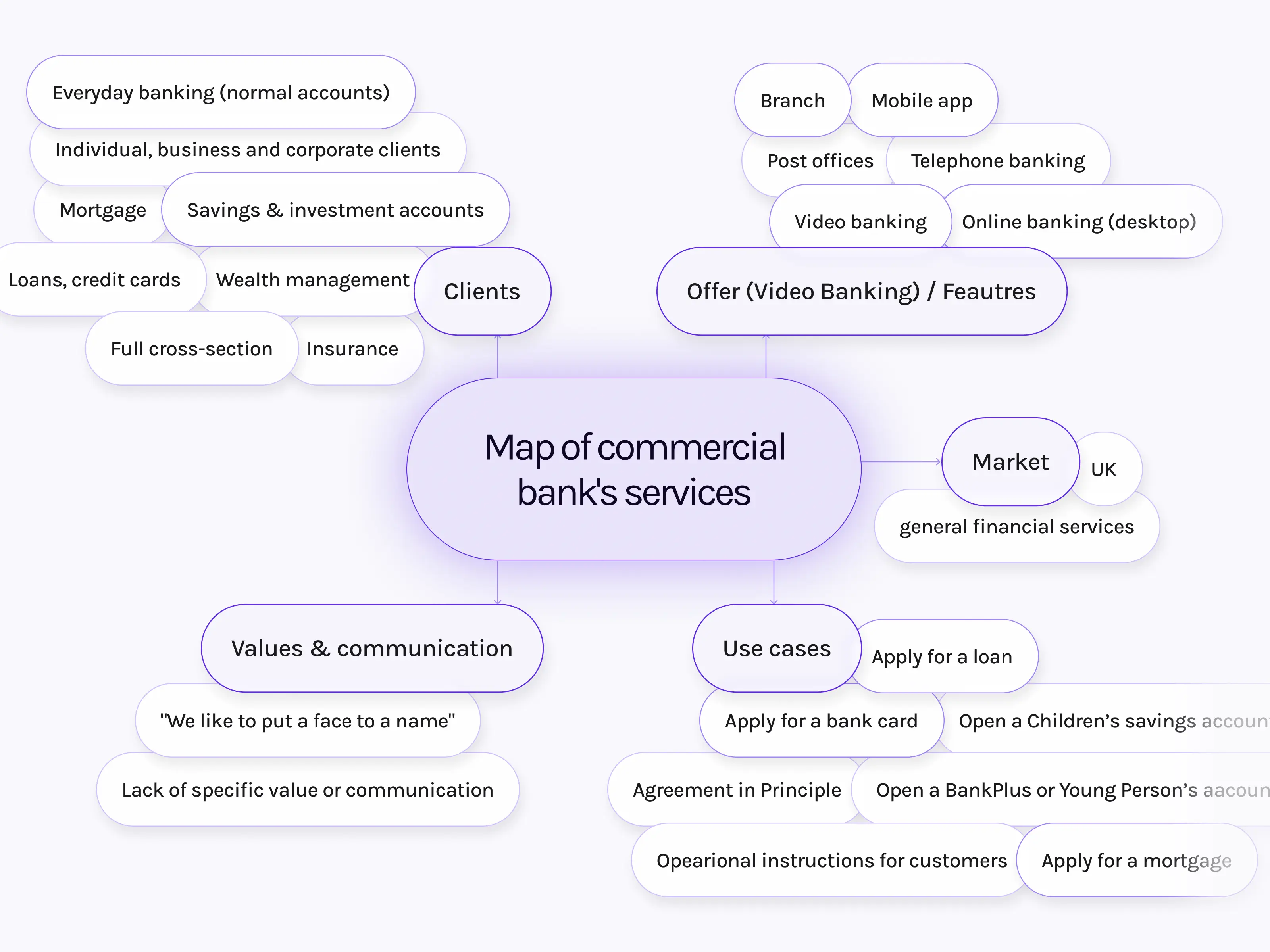
The developed information architecture and user flow have been divided into specific user ranges and access levels. Due to the wide range of possible actions, we used a method that allowed us to map all user flows in the form of a single diagram, thanks to the introduction of action tiles.
All mapped actions were then written down as specific user stories, along with a description of the details necessary for design and development.
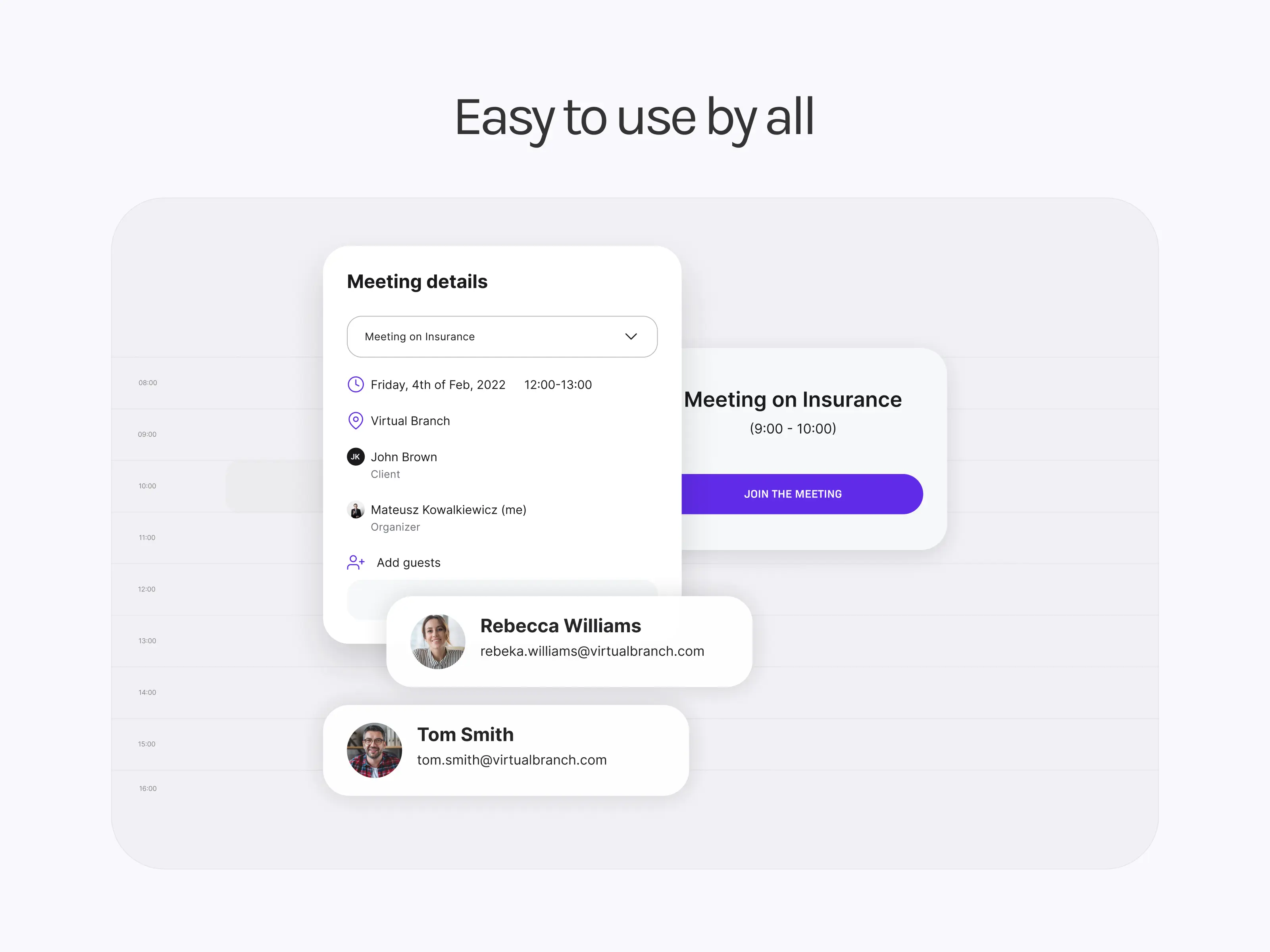
Design & Development
Thanks to the top-down approach, it was possible to start development and design work already during research work.
The highlighted framework functionalities enabled both the early start of backend activities and the design (and testing with recipients) of the first versions of the concept.
As we were deepening our knowledge - the developed materials were adjusted and refined, and the introduced changes were tested internally and with users on an ongoing basis.
Continuous Discovery
This actions not only allowed for the MVP of the solution to be created earlier, but also facilitated further discussions with bank stakeholders and clients.
Such a framework allowed to shift the burden of research from product discovery to discovering individual functionalities, smoothly changing Product Discovery into Continuously Discovery.
Check other case studies
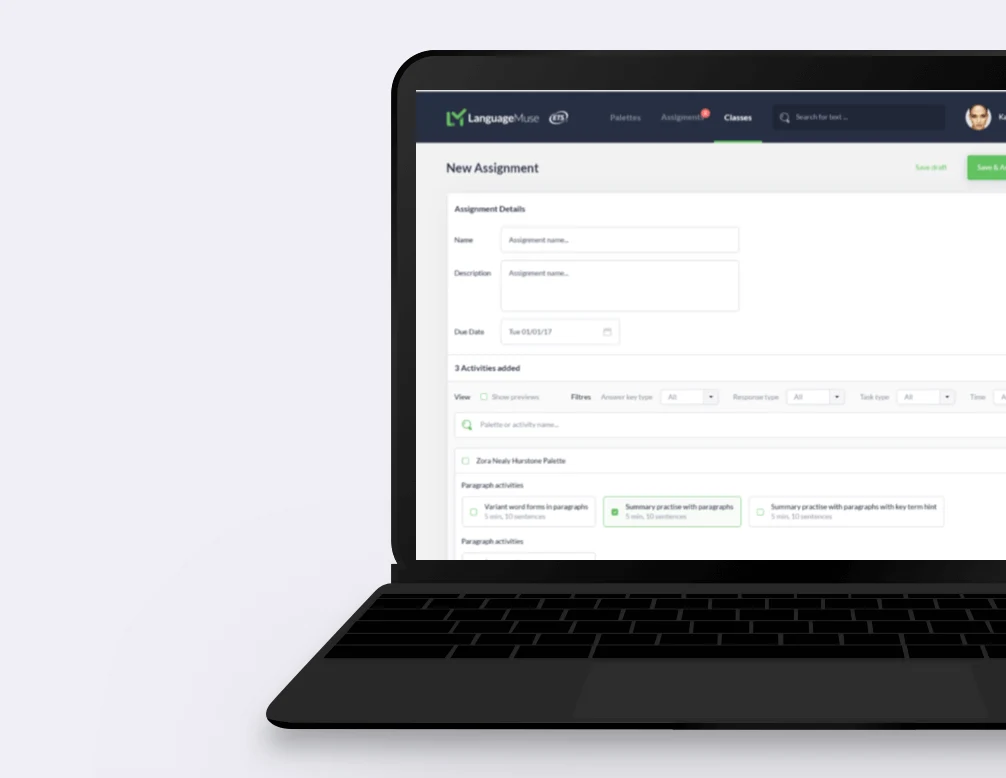
ETS Language Muse
Language Muse is an NLP-based educational platform for teachers working with U.S. students who face the challenge of learning English as their second language.
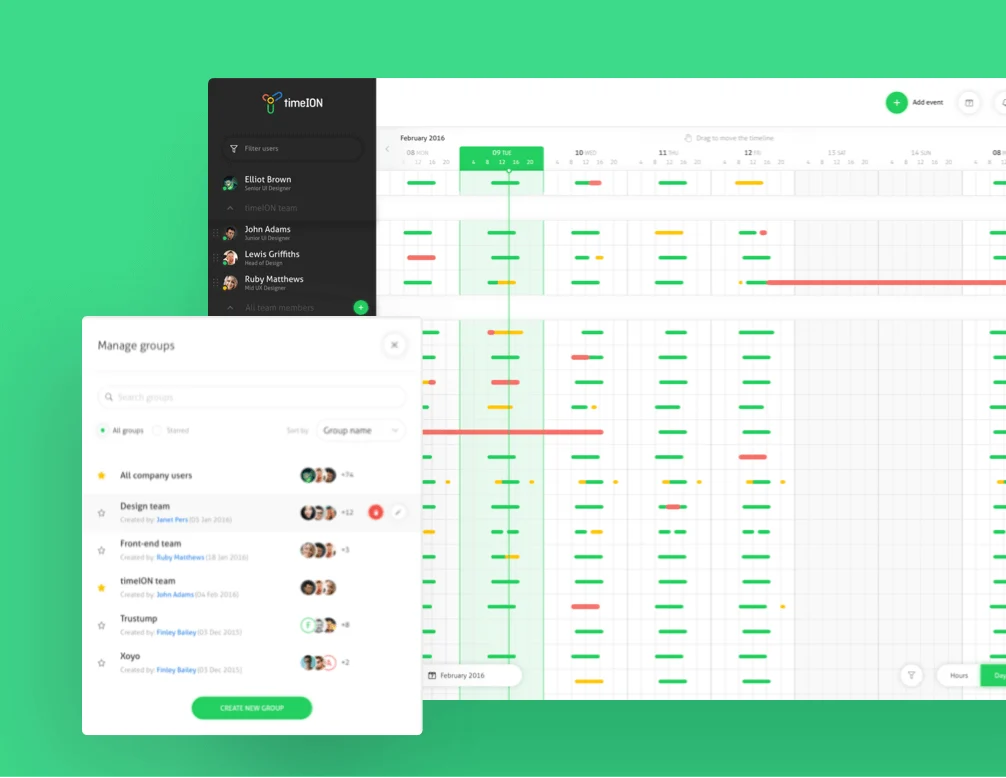
TimeION
TimeION simplifies the time off request policy and makes the experience pleasurable for both employees and managers.
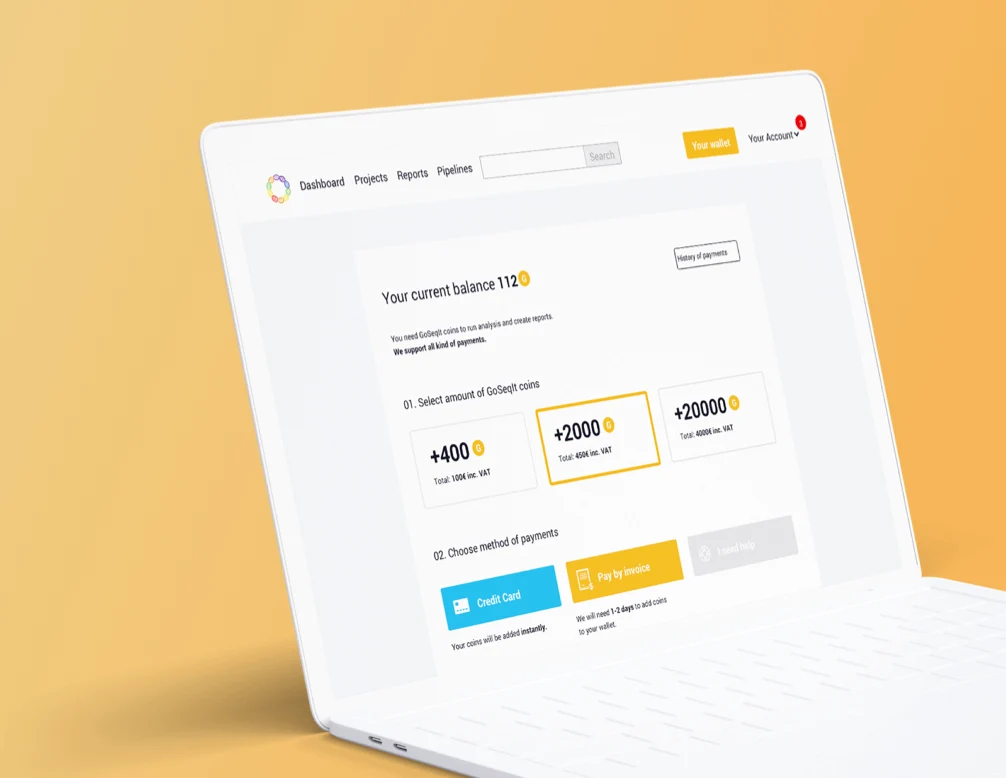
GoSeqIt
10Clouds provided a platform that allows conducting DNA analysis through the internet, from any place on Earth. It computes and stores all data in the cloud and generates legible reports.
Zapp RideShare
Zapp RideShare is an electric scooter rental service operated with a mobile app. Our team is responsible for the complete product makeover.